Wall plaster cement bags and dry sand volume from net wall area, thickness and an entered volume mix.
By Feroz Sheikh · Formula GCC-PLASTER-001 v1.0.0 · Tested formula
FormulaGCC-PLASTER-001v1.0.0
Project inputs
Enter your measurements. Switching units converts the same project, including coverage and unit rates. Package yields keep the unit printed beside each field.
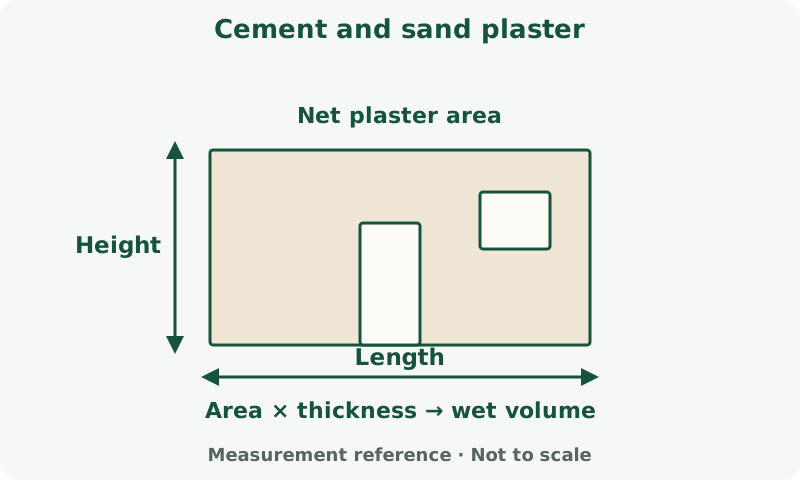
Deduct measured openings, then multiply net wall area by plaster thickness. Use the specified dry factor and cement-to-sand ratio. View image
Refine measurements and rates at any time. Your current values are included in the material-list PDF.
Calculated result
13bags
Cement bags to order
FormulaGCC-PLASTER-001
net area × thickness × dry factor × (1 + waste/100); cement kg = dry volume / (1 + sand parts) × bulk density
100 m²
Net wall area
1.5 m³
Wet plaster volume
632.016 kg
Cement before bag rounding
Planning estimate, not engineering advice. Confirm site measurements and product specifications. Calculation limits.
Estimate loose cement and sand for a specified plaster area, thickness and volume mix. Dry factor and bulk density are editable estimating assumptions; a site trial or product yield is more reliable for procurement.
Deduct openings from the measured wall face.
Enter the specified thickness, mix and site yield assumptions.
Round cement bags only after applying waste; keep sand volume and bag count separate.
Add your project costs
Enter supplier prices and any labour, equipment or delivery costs. Pick a currency — badges, inputs, and totals follow.
USD — US dollar▼
Costs use the block, brick or mortar rate you type. Construclytic does not fetch masonry prices. Lintels, corners and labour stay separate estimate lines.
Estimate loose cement and sand for a specified plaster area, thickness and volume mix. Dry factor and bulk density are editable estimating assumptions; a site trial or product yield is more reliable for procurement.
GCC-PLASTER-001 keeps wet plaster volume, loose dry material, cement kilograms and rounded bags separate. An editable dry factor and bulk density make the yield assumptions visible instead of hiding them inside a fixed bags-per-square-metre shortcut.
Worked example. For 100 m² at 15 mm, wet volume is 1.5 m³. At dry factor 1.33, mix 1:4, density 1,440 kg/m³ and 10% waste: cement is 632.016 kg (13 bags of 50 kg) and dry sand is 1.7556 m³.
See the example inputs and calculated result
This separate example uses the calculator's starting values in imperial units. It stays unchanged when you edit the tool above. Example rates, yields and dimensions are assumptions, not recommendations for your project.
Cement and sand plaster: example inputs
Input
Example value
Wall length
32.808399 ft
Wall height
32.808399 ft
Openings to deduct
0 ft²
Plaster thickness
0.590551 in
Sand parts per cement part
4 ratio
Dry-volume factor
1.33 ratio
Loose cement bulk density
1,440 kg / m³
Cement bag mass
50 kg / bag
Waste allowance
10 %
Example result: Cement bags to order — 13 bags.
net area × thickness × dry factor × (1 + waste/100); cement kg = dry volume / (1 + sand parts) × bulk density
Use the labelled units above when reproducing this example. To work in metric, switch the calculator to Metric; applicable measurements are converted, while product-specific units remain labelled.
1. Deduct openings from the measured wall face.
2. Enter the specified thickness, mix and site yield assumptions.
3. Round cement bags only after applying waste; keep sand volume and bag count separate.
Field notes that change the number
Treat every coat with its own specified thickness and material; do not multiply one thickness for dissimilar coats.
Deduct actual unplastered openings and add reveals as separately measured surfaces.
Use a trial batch or manufacturer yield to calibrate loose-volume estimates before a large order.
Common mistakes
Entering 15 centimetres when the field says millimetres.
Confusing cement particle density with loose bulk density.
Applying waste again to sand after the displayed volume already includes it.
No. It is an illustrative loose-volume conversion. Sand grading, moisture, compaction and application losses vary; update it from trial quantities.
Does 1:4 specify a compliant plaster system?
No. Mix proportions, coats, substrate preparation, thickness and curing must follow the responsible specification. This tool estimates quantities only.
What is the formula ID?
This plaster cement and sand calculator publishes formula GCC-PLASTER-001, version 1.0.0. The ID stays on the result and on the estimate line.